£30

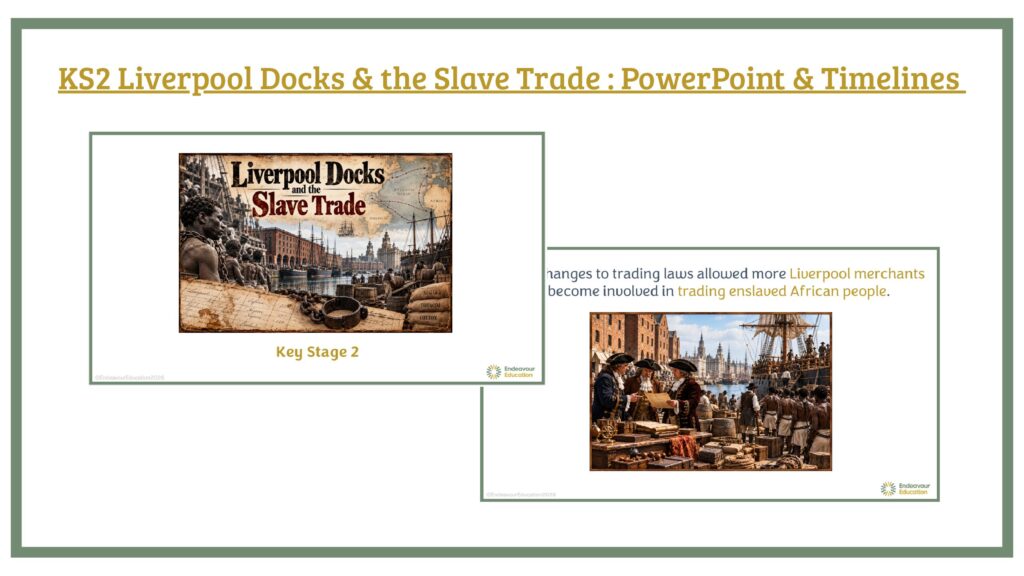
What is included in Liverpool Docks & the Slave Trade Pack?
This engaging and informative resource pack explores Liverpool’s involvement in the transatlantic slave trade, tracing its development from the late 1600s through to the abolition of slavery in 1833, and is specifically designed for Key Stage 2 pupils.
The child-friendly resources introduce pupils to important events in Liverpool’s history, including changes to trading laws in 1698, the voyage of the Liverpool Merchant in 1699, and the opening of Liverpool’s first wet dock in 1715. Pupils will learn how Liverpool grew into one of Britain’s busiest slave-trading ports, with ships transporting enslaved African people across the Atlantic in terrible conditions. The resources also explore the expansion of Liverpool’s docks, including the opening of Salthouse Dock in 1753 and George’s Dock in 1771, and how the city became wealthy through its involvement in the trade of enslaved people and goods such as sugar and tobacco.
In addition, the pack introduces pupils to important developments in the campaign to end the slave trade, including Liverpool writer William Roscoe, who spoke out against slavery in 1788, the abolition of the British slave trade in 1807, and the passing of the Slavery Abolition Act in 1833. These events help children understand the impact of the transatlantic slave trade, the suffering experienced by enslaved African people and the gradual changes that led towards abolition.
The pack also includes a set of sequencing cards and a printable timeline activity. These hands-on resources encourage children to place key events from Liverpool’s involvement in the transatlantic slave trade in chronological order, helping them visualise how the city’s role developed and changed over time. This interactive element strengthens chronological understanding, reinforces prior learning and encourages collaborative discussion as pupils explore connections between trade, wealth, the growth of Liverpool’s docks, the experiences of enslaved people and the movement towards abolition.